 Sending CRM
Customer campaigns
Bulk Email SendingPlan a send ↗White-glove enterprise email sending Managed bulk email sending
You approve the campaign. We write your sequence, set up your email CRM, choose who should hear from you and when, and send it for you. Put existing customer data to work across your sales team.
Sending CRMCustomer campaigns
Services
Launch a collection, fill an event, or announce an offer to customers who asked to hear from you. We prepare the email, test it, and send it on the schedule you approve.
Keep in touch between purchases. We plan the month, prepare each campaign in your CRM, and use the results to shape the next send.
When bounces spike or customers stop seeing your mail, we review the sending domain, campaign history, and provider feedback to identify the next fix.
Revenue calculator
Model one campaign against your current repeat revenue. Adjust the assumptions to fit your business.
Your sending plan
Answer a few questions about your campaign and review your brief.
Related reading
Email Marketing Report Example →A shop launching a new collection might start with customers who bought once after clicking a Facebook ad. Connect the store to the CRM, exclude everyone who has since purchased again, and agree on the offer. After the send, compare repeat orders with a similar group that received no email. That comparison tells you more about the campaign’s contribution than attributed sales alone.
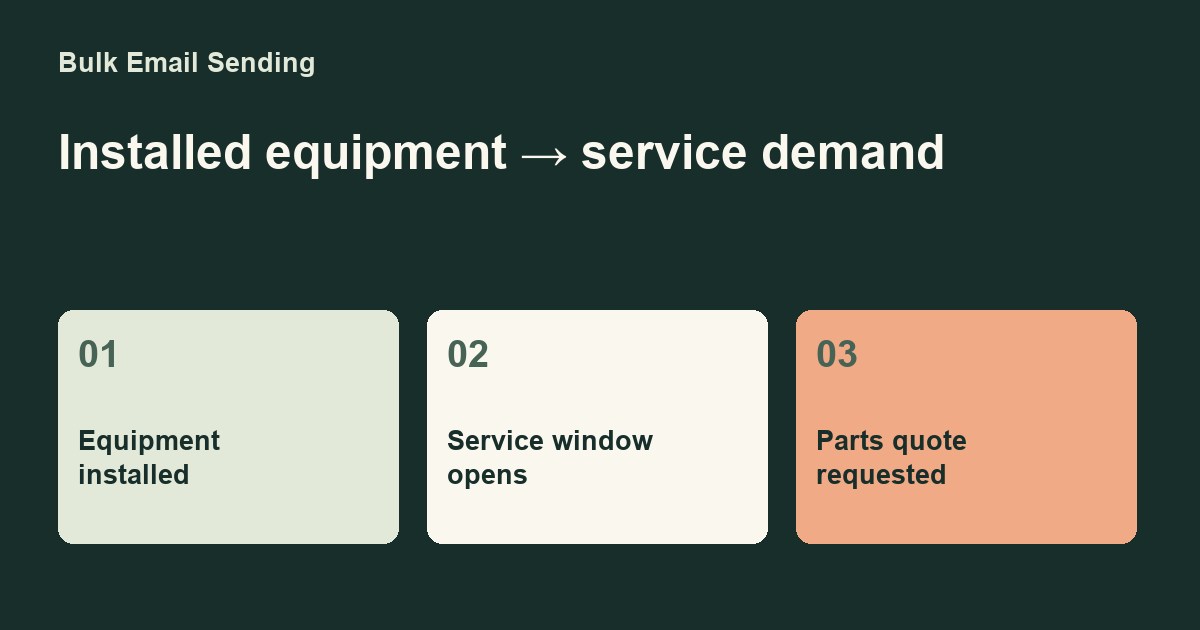
Turn open quotes and installed equipment into the next order. We write the messages, connect them to your CRM, and run the sends around your sales team’s work.
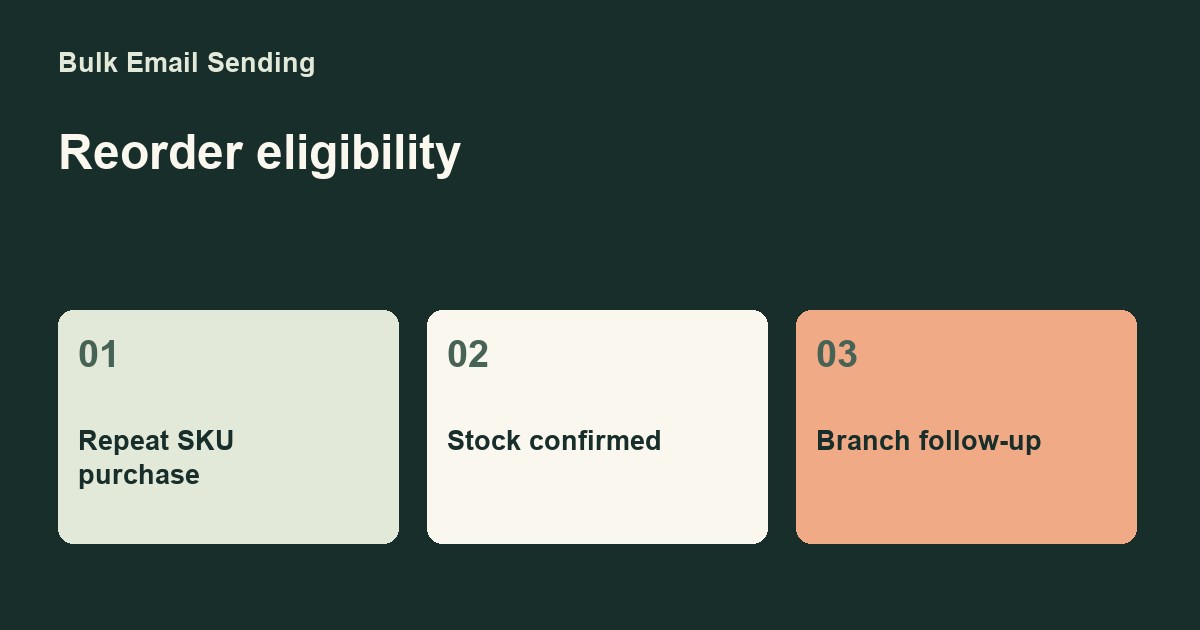
Give branch teams a coordinated way to bring trade accounts back for replenishment. We build reorder sequences around purchase patterns, stock and account ownership.
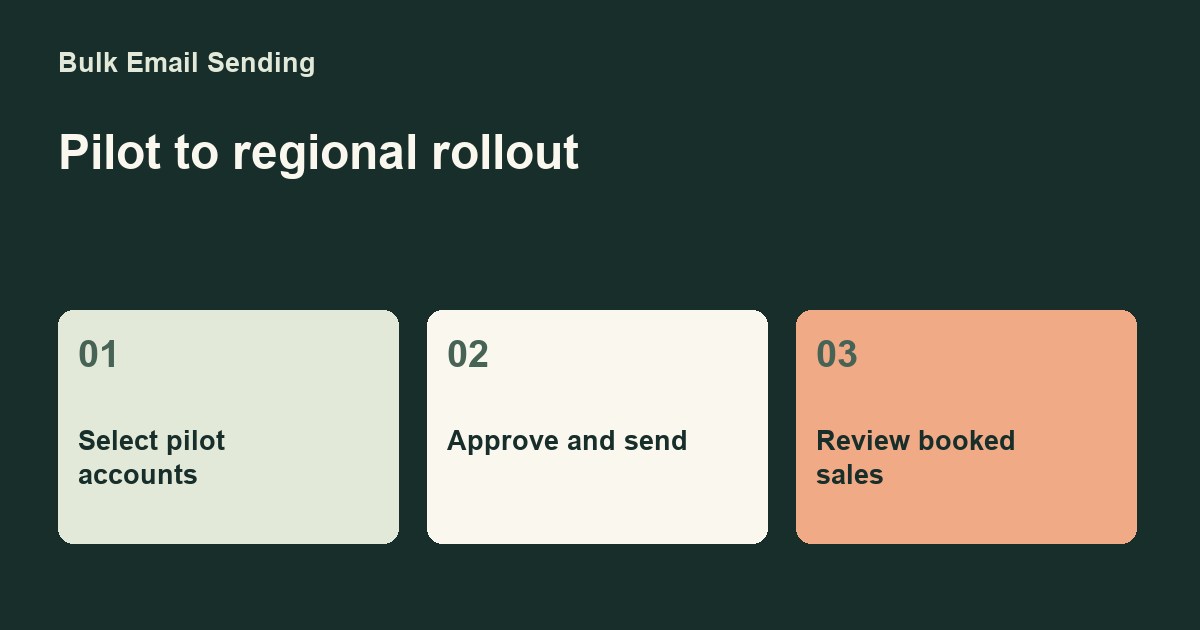
One team handles copy, CRM setup, approvals and sending across regions or business units. Start with a pilot that your sales and finance teams can measure.
Your email marketing software can tell you that a message was delivered. It usually needs sales data to tell you whether that customer ordered again. Before moving platforms, we check whether your CRM, sending tool and order system share a stable customer ID. For email marketing campaigns we also need permission status, the last purchase date and a way to stop sending after a sale. Transactional emails such as receipts follow a different schedule. Keeping those streams identifiable helps the team see whether a change in sender reputation started with a particular audience or campaign.
Look at the last purchase your customer made and the next decision the customer is likely to face. Someone who just ordered a machine may need installation instructions before a parts offer makes sense. A buyer who regularly reorders packaging may welcome a reminder shortly before stock runs low. If your sales team already has an open quote, a personal note from the account owner may be the right first touch. Bring one such decision to the planning session. We can build and test the sequence around it before widening the audience.
Bring the offer, the source of the mailing list, an example of a recent send and the name of the person who can sign off. A store or ERP contact can explain which orders count as repeat business and when returns appear. We translate those inputs into a written brief, a test audience, a proof and an approval schedule. If the approved sending platform already has that information, we can agree on scoped access during onboarding. A customer database export is unnecessary for an initial conversation.
Example: a team wants more second orders from buyers acquired through paid search. Start with a single first-purchase cohort, decide when a second order becomes eligible and choose the comparison before the first message goes out. Report how many accounts were eligible, how many received the campaign, how many ordered again and how much revenue remained after credits. That gives finance something it can reconcile and gives marketing a clear decision about the next campaign.